



Aldose Reductase
AKR1B1; Aldo-keto reductase family 1 member B
Aldose reductase is a small, cytosolic, monomeric enzyme which belongs to the aldo-keto reductase superfamily. Aldose reductase catalyzes the reduced form of nicotinamide adenine dinucleotide phosphate (NADPH)-dependent reduction of a wide variety of aromatic and aliphatic carbonyl compounds. It is implicated in the development of diabetic and galactosemic complications involving the lens, retina, nerves, and kidney.
Aldose reductase is both the key enzyme of the polyol pathway, whose activation under hyperglycemic conditions leads to the development of chronic diabetic complications, and the crucial promoter of inflammatory and cytotoxic conditions, even under a normoglycemic status. Aldose reductase represents an excellent drug target and a huge effort is being done to disclose novel compounds able to inhibit it.
All Product Categories
-
Aldose Reductase Related Products (134)
Related Products (134)

-
Antibodies (2)
-
Cemtirestat
 0 ImagesCat. No.: HY-W151897CAS No.: 309283-89-4Synonyms: CMTICemtirestat (CMTI) is a carboxymethylated thiatriazinoindole inhibitor of aldose reductase (ALR2). Cemtirestat potently inhibits rat ocular lens ALR2 with an IC50 of 0.116 μM, and exhibits a 302-fold selectivity for rat kidney ALR1. Cemtirestat is applicable to the research of advanced diabetic complications.
-
(Rac)-Ganoderic acid C2
 0 ImagesCat. No.: HY-N1517ACAS No.: 98296-48-1(Rac)-Ganoderic acid C2 is the racemate of Ganoderic acid C2 (HY-N1517). Ganoderic acid C2 is a bioactive triterpenoid in Ganoderma lucidum. Ganoderic acid C2 possesses anti-tumor, antihistamine, anti-aging and cytotoxic effects. Ganoderic acid C2 exhibits high inhibitory activity against the rat lens aldose reductase (RLAR) with an IC50 of 3.8 µM[.
-
L-Threose (solution),0.5M
 0 ImagesCat. No.: HY-W040288ACAS No.: 95-44-3L-Threose (solution), 0.5M is a 0.5 M solution of L-Threose in water. L-Threose is a substrate for Aldose Reductase and may prevent protein glycation.
-
Emodin-8-glucoside (Standard)
 0 ImagesCat. No.: HY-N0311RCAS No.: 23313-21-5Emodin-8-glucoside (Standard) is the analytical standard of Emodin-8-glucoside. This product is intended for research and analytical applications. Emodin-8-glucoside is an anthraquinone derivative that can be isolated from Aloe vera. Emodin-8-glucoside is the inhibitor for MAPK with an inhibition constant of 430.14 pM. Emodin-8-glucoside exhibits moderate inhibitory activity against rat lens aldose reductase (ALAR) and topoisomerases II with IC50s of 14.4 μM and 66 μM. Emodin-8-glucoside exhibits antioxidant, anti-inflammatory and anti-fibrotic activities. Emodin-8-glucoside can cross the blood brain barrier.
-
CC13401
 0 ImagesCat. No.: HY-187119CAS No.: 158575-73-6CC13401 is an aldose reductase (ALR2) inhibitor with an IC50 of 41.41 μM in rats. CC13401 inhibits the NADPH-dependent reduction reaction catalyzed by ALR2. CC13401 can be used in studies on the mechanisms related to the polyol pathway and diabetic complications.
-
Aldose reductase-IN-2
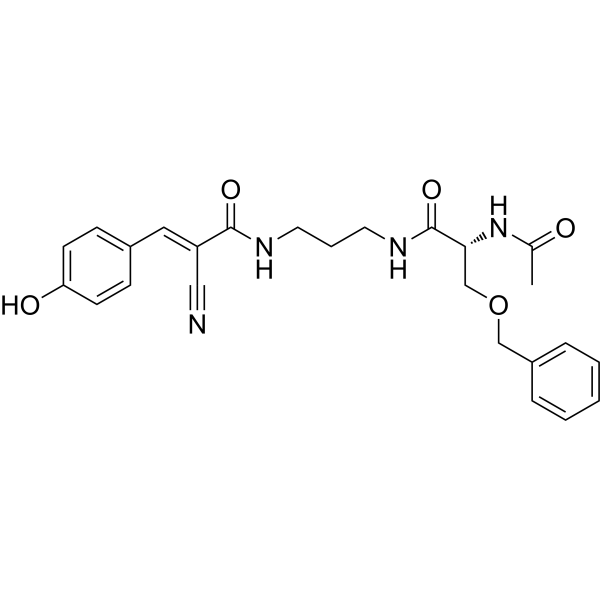 0 ImagesCat. No.: HY-115940CAS No.: 1687735-82-5Aldose reductase-IN-2 (Compound 5f) is a potent inhibitor of aldose reductase (AR). Aldose reductase-IN-2 has antioxidation capacity. Aldose reductase-IN-2 is a promising anti-diabetic complications agent.
-
CPSA
 0 ImagesCat. No.: HY-113850CAS No.: 1038713-54-0CPSA is a potent and competitive inhibitor against 20α-hydroxysteroid dehydrogenase (AKR1C1) with a Ki value of 0.86 nM. CPSA is promising for research of lung and endometrial cancers, premature birth and neuronal disorders.
-
ALR2-IN-2
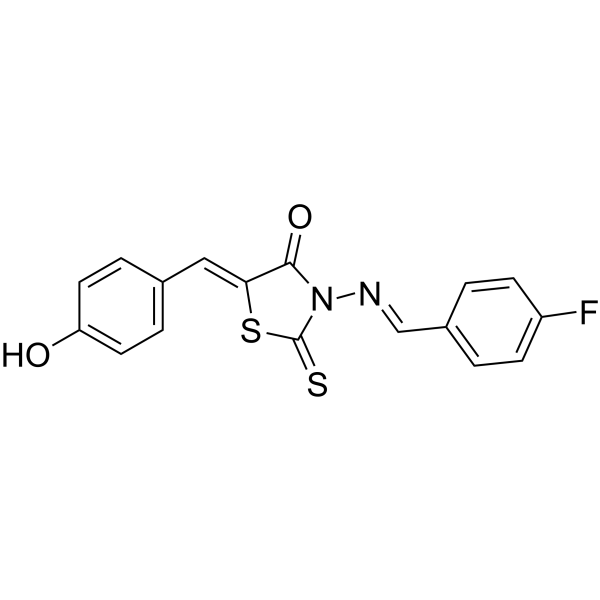 0 ImagesCat. No.: HY-151946ALR2-IN-2 is a potent inhibitor of aldose reductase (ALR2), with IC50s of 27 nM and 228 nM for rat ALR2 and ALR1, respectively. ALR2-IN-2 can be used for the research of diabetic complications.
-
Aldose reductase-IN-3
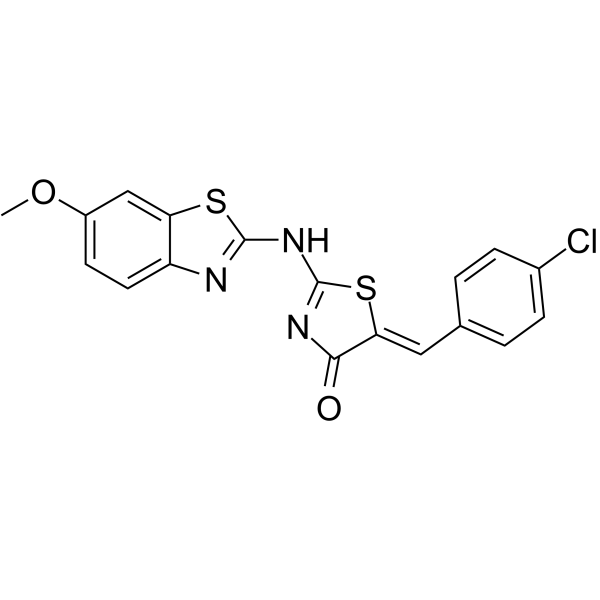 0 ImagesCat. No.: HY-115977CAS No.: 1390616-76-8Aldose reductase-IN-3 (Compound 5) is a potent and moderately selective inhibitor of aldose reductase (AR) with an IC50 of 3.99 μM. Aldose reductase has recently emerged as a molecular target that is involved in various inflammatory diseases, including sepsis. Aldose reductase-IN-3 has the potential for the research of sepsis.
-
M 16209
 0 ImagesCat. No.: HY-101555CAS No.: 128851-36-5M 16209 is an orally active aldose reductase (AR) inhibitor. M 16209 inhibits partially purified AR from various sources with IC50 values of 0.12, 0.24, 4.5, 1.2 and 9.3 μM for rat lens AR, bovine lens AR, bovine kidney AR, canine lens AR and human placental AR. M 16209 can be used for the research of metabolic disease, such as diabetes.
-
6-Methoxytricin
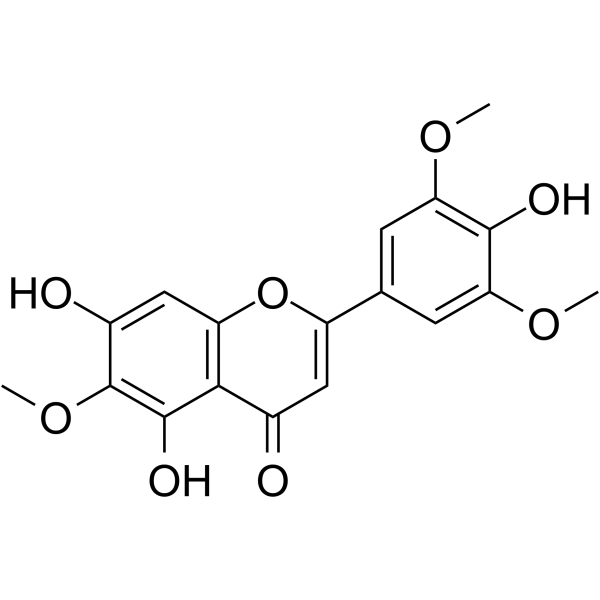 0 ImagesCat. No.: HY-N6883CAS No.: 76015-42-46-Methoxytricin (Compound 6) is an flavonoid isolated from Artemisia iwayomogi. 6-Methoxytricin (Compound 6) is an inhibitor on aldose reductase (AR) and advanced glycation endproduct (AGE) formation activities with IC50 values of 30.29 μM and 134.88 μM, respectively. 6-Methoxytricin (Compound 6) has potential as an anti-diabetic complications agent.
-
ADN 138
 0 ImagesCat. No.: HY-113738CAS No.: 99434-90-9ADN-138 is an aldose reductase inhibitor. ADN-138 reduces sorbitol levels in diabetic nerves and results in significant increases in MNCV and Na+, K+-ATPase in the nerves. ADN-138 can be used in the research of diabetic nerve complications.
-
Hydroxyevodiamine
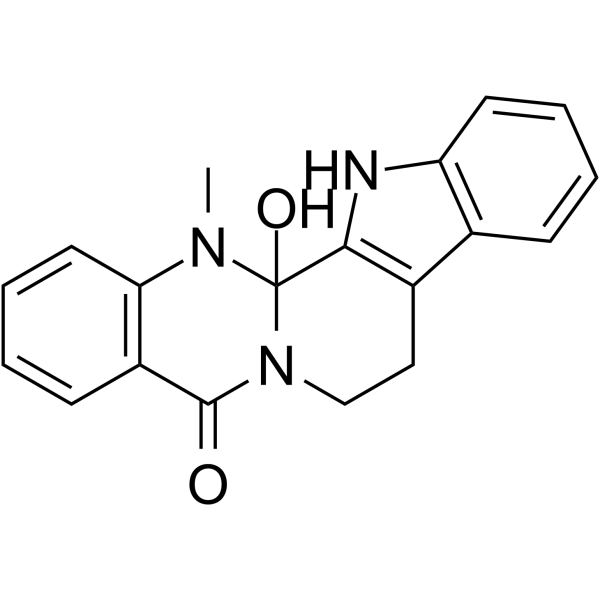 0 ImagesHydroxyevodiamine inhibits aldose reductase with an IC50 value of 24.1 μM.
-
EBPC
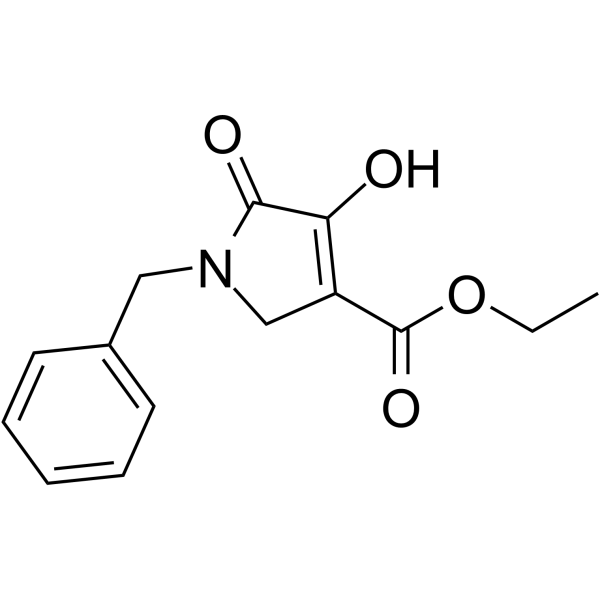 0 ImagesEBPC is a potent and selective aldose reductase inhibitor with an IC50 of 47 nM.
-
AZ-11665362
 0 ImagesCat. No.: HY-116811CAS No.: 629645-40-5AZ-11665362 is a CRTh2 (DP2) receptor antagonist with an IC50 of 2.6 nM. AZ-11665362 shows weak activity against aldose reductase, serotonin transporter, CYP 2C19, and CYP 2C9. AZ-11665362 lacks measurable inhibitory activity against COX-1 and COX-2. AZ-11665362 can be used for the research of asthma, and other inflammatory diseases.
-
6,7-Dihydroxy-4-coumarinylacetic acid
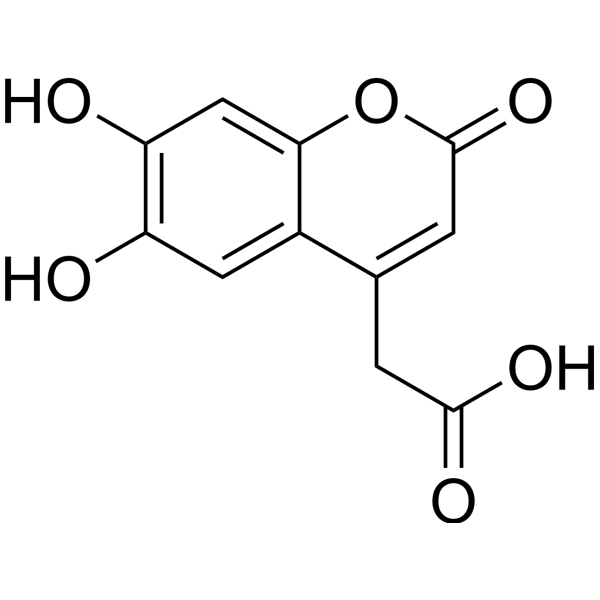 0 ImagesCat. No.: HY-D0064CAS No.: 88404-14-26,7-Dihydroxy-4-coumarinylacetic acid is a potent and selective inhibitor of ALR2. 6,7-Dihydroxy-4-coumarinylacetic acid inhibits ALR2, SDH andALR1 with IC50s of 9.6, 288 and 66.3 μM, respectively. 6,7-Dihydroxy-4-coumarinylacetic acid clearly suppresses galactitol accumulation.
-
(Rac)-Fidarestat
 0 ImagesCat. No.: HY-105185BCAS No.: 105300-43-4Synonyms: (Rac)-SNK 860(Rac)-Fidarestat ((Rac)-SNK 860) is the racemate of Fidarestat (HY-105185). (Rac)-Fidarestat is a potent aldose reductase inhibitor.
-
Aldose reductase-IN-10
 0 ImagesCat. No.: HY-184702Aldose reductase-IN-10 is an inhibitor of aldose reductase with an IC50 of 1.965 μM. Aldose reductase-IN-10 reduces malondialdehyde levels and enhances the activities of SOD, CAT and GPx. Aldose reductase-IN-10 decreases total cholesterol, triglyceride and LDL-C levels, while increasing HDL-C levels. Aldose reductase-IN-10 can be used for the research of diabetic complications.
-
ALR2/α-Glucosidase-IN-2
 0 ImagesCat. No.: HY-184330ALR2/α-Glucosidase-IN-2 is an inhibitor of α-glucosidase and aldose reductase ALR2. ALR2/α-Glucosidase-IN-2 has a Ki value of 11.68 nM against yeast α-glucosidase and a Ki value of 72.64 nM against ovine ALR2. ALR2/α-Glucosidase-IN-2 inhibits intestinal carbohydrate digestion regulatory enzymes and key enzymes in the polyol pathway. ALR2/α-Glucosidase-IN-2 can be used in diabetes-related research.
-
FR-62765
 0 ImagesCat. No.: HY-105485CAS No.: 105346-34-7FR-62765 is a derivative of WF-3681. FR-62765 can significantly inhibit the accumulation of sorbitol in the sciatic nerve and the decrease of motor nerve conduction velocity in the tail of diabetic neuropathy rats, which can be used in the research of diabetic neuropathy.




